Powered By Blogger

Touristic Sites In Jordan

Amman is the capital of the Hashemite Kingdom Of Jordan Near Amman (AlSalt,Wadi Seer) 1-- North and West of Amman(Jerash,‘Ajloun,Irbid,Umm Qais,Hemma,Umm al-Jimal) The Jordan Valley(The River Jordan,The Dead Sea,Deir Ain Abata Deir ‘Alla,Tabaqat Fahl) 2-- East of Amman: The Desert Castle Loop(Qasr al-Hallabat,Azraq Oasis,Qasr al-Azraq,Shomari Wildlife Reserve ,Qusayr ‘Amra,Qasr al-Harraneh,Qasr al-Mushatta Qastal) 3-- South of Amman(The King’sHighway,Madaba,MountNebo, Mkawer,Hammamat Ma’een,Karak,Khirbet al-Tannur,Tafileh ,Shobak,Dana Nature Reserve Wadi Rum) 4-- Petra 5-- Aqaba 6-- The Ancient Holy Land 7-- Islamic Holy Sites in Jordan
Showing posts with label mosque. Show all posts

Saturday, March 31, 2012

Abbasid Mosque


Abbasid Mosque


Medieval Ayla 
Aqaba, Jordan
The Blue Guide dates this mosque, at least in its present form, between the mid-8th century and mid-9th century AD. It is a mosque for congregational worship, with a peristyle courtyard. Read this photo from left (north), to right (south). The mosque is seen here from the west side; the front, and longer (sic), side of the building is north .
From the columned entrance (1), worshipers passed into a large rectangular courtyard (2), and continued through another row of columns and into the first prayer hall (3). Past yet another row of columns is the inner prayer hall, with a mihrab (A niche in the wall of a mosque that is oriented towards Mecca, the direction of prayer (qibla); for example, towards the west, when one is in Indiaon the south wall (4). The dimensions of the mosque are approximately 30m (N-S) by 50m (E-W).
Medieval Ayla is located on the beach of modern Aqaba, Jordan's port on the Red Sea.

Sunday, March 25, 2012

Decoration of Vines and Grapes

Decoration of Vines and Grapes

early 8th century AD 
Small Chamber, Amra, Jordan
 
The two small chambers on either side of the throne room are decorated with scrolls of vines and grapes, imitating the decoration found on Byzantine mosaics. The Umayyad artists drew on the Classical heritage of their newly-conquered territories, in order to decorate their royal palaces with secular themes rather than Christian or Islamic religious designs. 

Palace Lady

Palace Lady

early 8th century AD 
Audience Hall, Amra, Jordan
  •  
  • A seated palace lady or courtesan, dressed in a transparent upper garment and voluminous lower robe, beckons invitingly to the revelers below. 

Dome with Constellations

Dome with Constellations

early 8th century AD 
Caldarium, Amra, Jordan
 

The constellations are painted on the dome in reversed order, as if seen from the outside of a celestial globe. North is in the center, surrounded at a distance by a narrow red band representing the Zodiac. The ever-helpful Blue Guide provides a key:
A = Ursa MajorF = AndromedaK = LeoP = Capricorn
B = Ursa MinorG = CygnusL = CancerQ = Sagittarius
C = CepheusH = HerculesM = GeminiR = Scorpio
D = DracoI = OphiucusN = OrionS = Erichthonius
E = PerseusJ = BootesO = DophinusT = Aquarius

Saturday, March 24, 2012

Qasr Amra

Qasr Amra

Amra, Jordan


The desert complex of Qasr Amra is located about 100km east of Amman and 20km south of Azraq. It was built in the early 8th century by an Umayyad ruler or prince: perhaps Walid I (705-715), builder of the Great Mosque in Damascus; or alternatively the pleasure-loving Walid II (743-744), during his long exile in the desert, before he became caliph.

The restored buildings consist of a triple-vaulted audience hall (right) with attached bathhouse and waterworks (left). They are seen here from the front (north). The inside is covered with rare but very deteriorated wall paintings, that depict scenes of pleasure in a style influenced by Classical and Byzantine traditions.
Alternate spellings include Qusayr or Quseir for Qasr, and Amrah for Amra.
français.................................................................
 Le complexe désert de Qasr Amra est situé à environ 100 km à l'est d'Amman et 20km au sud de Azraq. Il a été construit dans le début du 8ème siècle par un prince souverain omeyyade ou: peut-être Walid Ier (705-715), constructeur de la Grande Mosquée de Damas, ou encore le plaisir d'amour-Walid II (743-744), au cours de son long exil dans le désert, avant qu'il ne devienne calife.

Les bâtiments restaurés se composent d'un public triple salle voûtée (à droite) avecétablissement de bains ci-jointe et d'adduction d'eau (à gauche). On les voit ici à l'avant(au nord). L'intérieur est recouvert de peintures murales rares, mais très dégradé, quidépeignent des scènes de plaisir dans un style influencé par les traditions classiques et byzantines.

Les variantes orthographiques Qusayr ou Quseir pour Qasr, et Amrah pour Amra.
italiano........................................................................................................................................................
Il complesso deserto di Qasr Amra si trova a circa 100km ad est di Amman e 20 km a sud di Azraq. E 'stato costruito agli inizi del secolo ottavo da parte di un sovrano o principe omayyade: forse Walid I (705-715), costruttore della Grande Moschea di Damasco, o in alternativa, il gaudente Walid II (743-744), durante il suo lungo esilio nel deserto, prima di diventare califfo.

Gli edifici restaurati sono costituiti da una tripla volta Aula (a destra) con annessostabilimento balneare e giochi d'acqua (a sinistra). Sono visti qui di fronte (nord).L'interno è ricoperto da pitture murali rari ma molto deteriorato, che raffigurano scene dipiacere in uno stile influenzato dalla tradizione classica e bizantina.

Varianti includono Qusayr o Quseir per Qasr e Amrah per Amra.

español........................................................................................................................................................
El complejo desierto de Qasr Amra está situado a unos 100 kilometros al este de Ammán y 20 kilómetros al sur de Azraq. Fue construido en el siglo 8 por un gobernanteo príncipe omeya: tal vez Walid I (705-715), constructor de la Gran Mezquita de Damasco, o, alternativamente, el amante de los placeres Walid II (743-744), durante su largo exilio en el desierto, antes de que él se convirtió en califa.

Los edificios restaurados consisten en una audiencia de triple bóveda de la sala (derecha) con baños adjunto y abastecimiento de agua (izquierda). Se ve aquí desde el frente (norte). El interior está cubierto con pinturas murales muy raras, aunque deteriorados, que representan escenas de placer con un estilo influenciado por la tradición clásica y bizantina.

Variantes incluyen Qusayr o Quseir de Qasr, y Amrah de Amra.

Deutsch.......................................................................................................................................................
Die Wüste Komplex von Qasr Amra liegt etwa 100km östlich von Amman und 20 km südlich von Azraq entfernt. Es wurde im frühen 8. Jahrhundert von einemUmayyaden-Herrscher oder Fürst gebaut: vielleicht Walid I. (705-715), Erbauer der Großen Moschee in Damaskus, oder alternativ die vergnügungssüchtigen Walid II. (743-744), während seines langen Exils in der Wüste, bevor er zum Kalifen.

Die restaurierten Gebäude bestehen aus einem dreifach gewölbten Audienzhalle(rechts) mit angebautem Badehaus und Wasserwerke (links). Sie werden hier von der Vorderseite (N) zu sehen. Die Innenseite ist mit seltenen, aber sehr verschlechtertemWandmalereien, die Szenen der Freude zeigen und im Stil von klassischen undbyzantinischen Traditionen beeinflusst abgedeckt.

Alternative Schreibweisen gehören Qusayr oder Quseir für Qasr und Amrah für Amra

ελληνικά.....................................................................................................................................................
Το συγκρότημα του Κασρ έρημο Amra βρίσκεται περίπου 100 χιλιόμετρα ανατολικά τουΑμάν και 20 χιλιόμετρα νότια της Azraq. Χτίστηκε στις αρχές του 8ου αιώνα, από ένανχάρακα ή Umayyad πρίγκιπα: ίσως Ουαλίντ Ι (705-715), οικοδόμος της Μεγάλης Τζαμίστη Δαμασκό? Ή, εναλλακτικά, την ευχαρίστηση που αγαπούν Ουαλίντ ΙΙ (743-744), κατά τη διάρκεια της μακράς εξορίας του στην έρημο, πριν γίνει χαλίφης.

Τα αναπαλαιωμένα κτίρια αποτελούνται από ένα τριπλό-θολωτή αίθουσα ακροατήριο(δεξιά) με συνημμένη λουτρά και ύδρευσης (αριστερά). Έχουν δει εδώ από τηνμπροστινή (βόρεια). Το εσωτερικό είναι καλυμμένο με σπάνιες αλλά πολύυποβαθμισμένες τοιχογραφίες, που απεικονίζουν σκηνές της απόλαυσης σε ένα ύφοςεπηρεάζεται από κλασική και τη βυζαντινή παράδοση.

Αναπληρωματικό ορθογραφίες περιλαμβάνουν Qusayr ή Quseir για Κασρ, και Amrahγια Amra.


Wednesday, March 7, 2012

Ayyubid Mosque


Ayyubid Mosque

Azraq, Jordan
The simply-built mosque includes a cylindrical projection, seen here, to accommodate the mihrab, the prayer niche inside the mosque that faces south towards Mecca.

Sunday, March 4, 2012

Umayyad Mosque

Umayyad Mosque

Citadel, Amman, Jordan

This view looking north shows the domed entrance (vestibule) to the Umayyad governor's palace (8th century) in the background. The dome is a modern reconstruction that gives the building an odd, Pac-Man-like appearance. The entrance to the vestibule is the large semicircular archway below the dome. In the foreground are the remains of the palace mosque, whose column bases surround an open courtyard. A short section of the mosque's wall has been reerected here.

The photo makes it clear that the axis of the vestibule is not aligned with the axis of the mosque, which nominally points in the direction of Mecca. There doesn't seem to be any obvious reason why the vestibule could not have been lined up with the mosque, although I suppose there is no architectural rule that would have required it to do so.

Saturday, February 25, 2012

Qasr al-Hallabat


Qasr al-Hallabat is located just off the main road about 30 kilometers east into the desert from Zarqa. It was originally a Roman fort built during the reign of Caracalla (198-217 CE) to defend against raiding desert tribes. There is evidence that, before Caracalla, Trajan had established a post there on the remains of a Nabatean settlement. During the seventh century CE, the site became a monastery, and the Umayyads then fortified it and decorated it with ornate frescoes and decorative carvings. Two kilometers past Qasr al-Hallabat, heading east, are ruins of the main bathing complex known as Hammam al-Sarah. The baths were once adorned with marble and lavish mosaics. Today, you can still see the channels that were used for hot water and steam

The seven hills of Amman


The seven hills of Amman


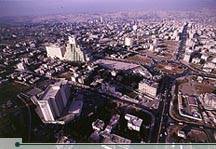
The seven hills of Amman are an enchanting mixture of ancient and modern. Honking horns give way to the beautiful call to prayer which echoes from the stately minarets which grace the city. Gleaming white houses, kabab stalls and cafés are interspersed with bustling markets—known in Arabic as souqs—and the remains of civilizations and ages long past. Sunset is perhaps the best time to enjoy Amman, as the white buildings of the city seem to glow in the fading warmth of the day. The greatest charm of Amman, however, is found in the hospitality of its residents. Visitors to Amman—and the rest of Jordan, for that matter—are continually surprised by the genuine warmth with which they are greeted. "Welcome in Jordan" is a phrase visitors will not soon forget.

Amman is built on seven hills, or jabals, each of which more or less defines a neighborhood. Most jabals once had a traffic circle, and although most of these have now been replaced by traffic lights, Amman’s geography is often described in reference to the eight circles which form the spine of the city. First Circle is located near downtown, and the series extends westward through Eighth Circle.

 History

Amman has served as the modern and ancient capital of Jordan. It is one of the oldest continuously inhabited cities in the world, with a 1994 excavation uncovering homes and towers believed to have been built during the Stone Age, circa 7000 BCE. There are many Biblical references to the city, which by about 1200 BCE had become the Ammonite capital ofRabbath-Ammon. The Ammonites fought numerous wars with Saul, David and others.

The history of Amman between the end of its Biblical references (around 585 BCE) and the time of the Ptolemies is unclear. We do know that the city was renamed Philadelphia after the Ptolemaic ruler Philadelphus in the third century BCE. After coming under Seleucid and Nabatean rule, Philadelphia was taken by the Roman vassal King Herod in 30 BCE. The city became part of the Decapolis League, a loose alliance of ten Roman-ruled cities including Jerash, Gadara (present-day Umm Qais), Pella, Arbila (Irbid) and others. Under Roman rule, Philadelphia was replanned and reconstructed in typically grand Roman style with a colonnaded street, baths, an amphitheater and impressive public buildings.

During the Byzantine period, Philadelphia was the seat of a Christian bishop, and several expansive churches were built. The city declined somewhat during the late Byzantine years, and was overrun by the Persian Sassanians in 614 CE. Their rule was  short-lived, however, collapsing before the Arabian armies of Islam around the year 635. The name of the city then returned to its Semitic origin of Ammon, or "Amman." It remained an important stop on the caravan routes for many years, but eventually trade patterns shifted and dried up the lifeblood of Amman. The city declined to little more than a provincial village for many centuries.
Amman’s "modern" history began in the late 19th century, when the Ottomans resettled a colony of Circassian emigrants there in 1878. Many of their descendants still reside in Amman. During that time and the early decades of the 20th century, the neighboring city of Salt was more important as a regional administrative and political center. However, after the Great Arab Revolt secured the state of Transjordan, Emir Abdullah bin al-Hussein made Amman his capital in 1921

Since then, the city has grown by leaps and bounds into a modern, thriving metropolis of well over a million people. Amman’s growth has been driven largely by political events in the region, and especially by the Arab-Israeli conflict. After the wars of 1948 and 1967, successive waves of Palestinian refugees ended up in Amman. Moreover, the city’s population was further expanded by another wave of immigrants arriving from Iraq and Kuwait during the 1990-91 Gulf Crisis


 Sights of Interest


Most of Amman’s noteworthy historical sites are clustered in the downtown area, which sits at the bottom of four of Amman’s seven hills, or jabals. The ancient Citadel, which towers above the city from atop Jabal al-Qala’a, is a good place to begin a tour of the city. The Citadel is the site of ancient Rabbath-Ammon, and excavations here have revealed numerous Roman, Byzantine and early Islamic remains. The most impressive building of the Citadel, known simply as al-Qasr ("the Palace"), dates back to the Islamic Umayyad period. Its exact function is unclear, but it includes a monumental gateway, an audience hall and four vaulted chambers. A colonnaded street also runs through the complex. To the north and northeast are the ruins of Umayyad palace grounds.

Close to al-Qasr lie the remains of a small Byzantine basilica. Corinthian columns mark the site of the church, which is thought to date from the sixth or seventh century CE. About 100 meters south of the church is what is thought to have been a temple of Hercules, today also known as the Great Temple of Amman. The temple was built in the reign of the emperor Marcus Aurelius (161-180 CE), and is currently under restoration.

Also on Citadel Hill, just northwest of the Temple of Hercules, is the Jordan Archeological Museum. This small museum houses an excellent collection of antiquities ranging from prehistoric times to the 15th century. There is an exhibit of the Dead Sea Scrolls, a copy of the Mesha Stele (see Madaba section for explanation) and four rare Iron Age sarcophagi. Museum hours are 08:30-17:00 daily. On Fridays and official holidays the museum is open from 09:00-16:00


Downhill from the Citadel and five minutes walk east from downtown, the Roman Theater is the most obvious and impressive relic of ancient Philadelphia. The theater, which was built during the reign of Antonius Pius (138-161 CE), is cut into the northern side of a hill that once served as a necropolis—or graveyard. It is very similar in design to the amphitheater at Jerash, and can accommodate 6000 spectators. The theater is still used periodically for sporting and cultural events.


Two small museums are built into the foundations of the Roman theater. The Jordan Folklore Museum is in the right wing of the theater and displays a collection of items showing the traditional life of local people. At the other end of the theater stage, the Museum of Popular Traditions displays traditional Jordanian costumes, including fine embroidery and beautiful antique jewelry. It also houses several sixth-century mosaics from Madaba and Jerash. The Museum of Popular Traditions is open daily 09:00-17:00, and closed on Tuesday. The Jordan Folklore Museum is open every day from 09:00-17:00, except Friday when its hours are 10:00-16:00.

To the northeast stands the small theater, or Odeon, which is still being restored. Built at about the same time as the Roman theater, this intimate 500-seat theater is used now as it was in Roman times, for musical concerts. Archaeologists think that the building was originally covered with a wooden or temporary tent roof to shield performers and audiences from the elements. Heading southwest from the theater complex, Philadelphia’s chief fountain, or Nymphaeum, stands with its back to Quraysh Street. Much of the fountain, which was completed in 191 CE, is hidden from public view by private houses and shops.


 The Nymphaeum is believed to have contained a 600 square meter pool, three meters deep, which was continuously refilled with fresh water. Jordan’s Department of Antiquities is currently excavating the Nymphaeum, and ultimately hopes to restore the site to its original structure by 2010.

From the Nymphaeum, the short stroll to the King Hussein Mosque bustles with pedestrians, juice stands and vendors. The area around the King Hussein Mosque, also known as al-Husseini Mosque, is the heart of modern downtown Amman. The Ottoman-style mosque was rebuilt in 1924 on the site of an ancient mosque, probably also the site of the cathedral of Philadelphia. Between the al-Husseini Mosque and the Citadel is Amman’s famous gold souq, which features row after row of glittering gold treasures


.

Abu Darweesh Mosque.


The modern King Abduallah Mosque